
After Death Care Guide for Pets
How to care for your loved one at home for an extended period after they pass away
A common question we get is, "What happens if my pet dies overnight or otherwise cannot be brought to you, a crematory or a veterinary practice right away?"
We know that while sometimes a death is anticipated, other times it can be sudden and jarring. Regardless of the circumstances, the immediate moments after the death of a loved one can be heartbreakingly difficult, and very few among us know beforehand what we may need in that situation. The best first step is to take a moment. Breathe. Then move at whatever pace feels best.
It is safe to keep a loved one at home for an extended period
In general, it is completely safe to keep a loved one at home for an extended period of time. Some families even intentionally hold multiple day vigils at home with their loved ones.
Within the first 24 hours after death, most of the physical changes that occur are internal. The most obvious physical change will be when rigor mortis sets in and the muscles and limbs stiffen. Rigor mortis usually starts within two hours after death and will slowly progress throughout the body. Typically after about 24 hours, the muscles will begin to relax again.
Lowering the body temperature is the most reliable way to help slow down the natural decomposition process. You can do this by moving your loved one to a cooler part of your home or turning down the thermostat. Another option is to place frozen ice or gel packs underneath your loved one's core. As the packs thaw and reach room temperature, they can be switched out with frozen ones. Some families with smaller pets have even swaddled them in a blanket or towel and moved them into a refrigerator.
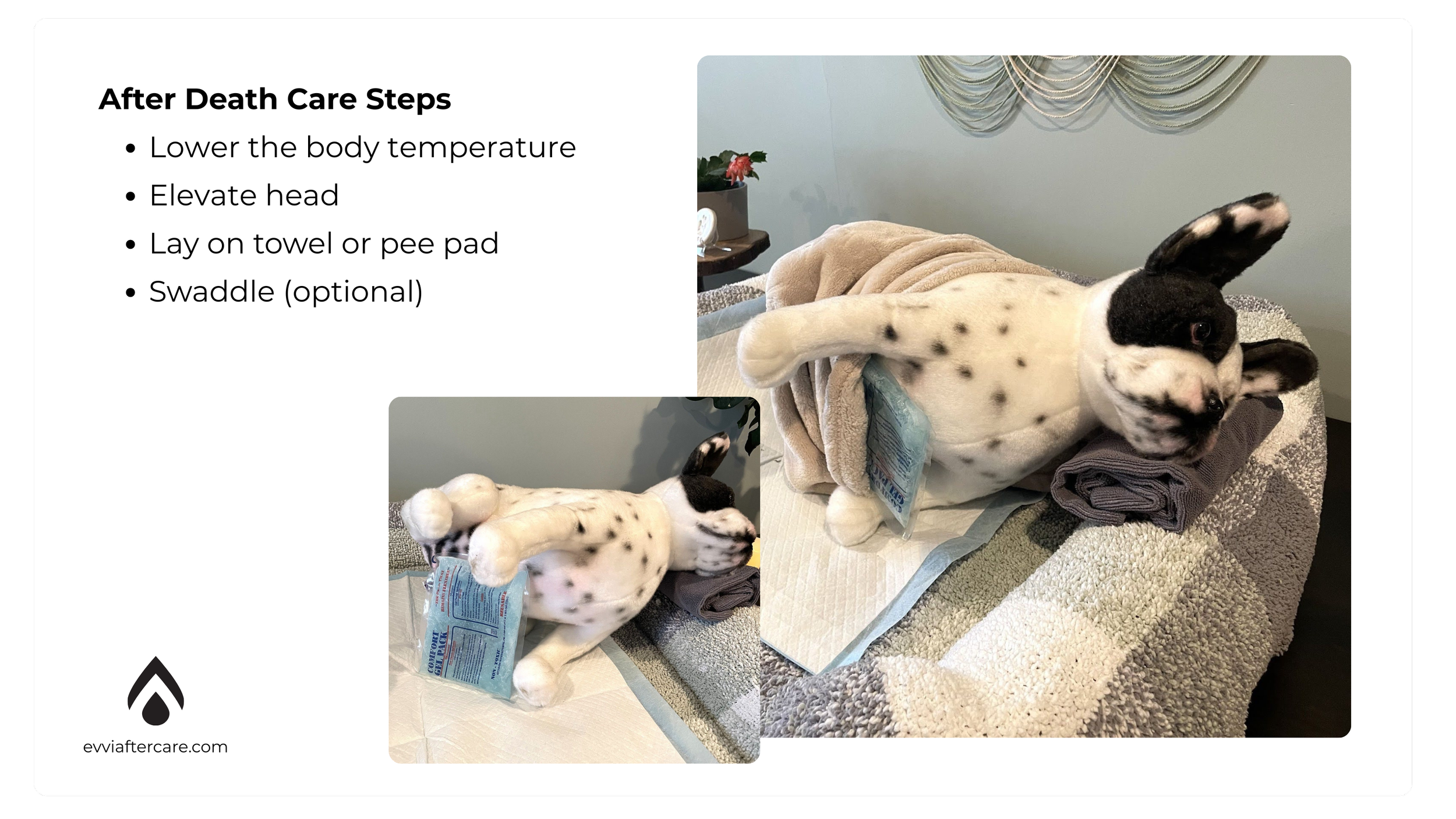
Key steps to take, modeled by our office plushie below:
Lower your loved one’s body temperature using ice packs or by lowering the thermostat where they are
Elevate their head slightly with a rolled towel or pillow
Place a pee pad or towel beneath them if possible
Swaddle in a blanket or towel
Debunking a common myth: there’s no need for immediate freezing (unless you’re planning for taxidermy)
A common myth is that you need to freeze your loved one immediately after death. This isn't necessary, but you can take this step if it's most comfortable for you and your family. However, we have worked with families who kept their pet at home in freezing temperatures for months while they took the time to figure out exactly how they wanted their loved one cared for. One notable exception is for anyone considering taxidermy or soft tissue preservation.
Moving a loved one into freezing temperatures as soon as possible after death can help ensure the taxidermy process is viable. We offer partial taxidermy and skeletonization services on a limited basis, so please let us know if you have any questions about those options.
What to expect from the body after passing and best practices for hygienic care
It is completely normal for urine or feces to be released after death as muscles constrict and relax and as gas is released from the bacteria that aid in the decomposition process. Many animals stop eating or drinking normally towards the end, so this may not even be an issue. However, placing a towel, blanket, or disposable pad underneath your loved one can help to contain any mess. Similarly, gas can build up in the stomach and lungs and push fluid out through the mouth or nose. Keeping your pet's head slightly elevated with a pillow or rolled hand towel can help prevent this light red discharge around the nose or mouth.
If you wish to bathe your pet after death, we recommend using cool or room temperature water with a mild soap. You can then gently dry them with a towel or by using a hair dryer on a cool setting. If your loved one starts to emit an unpleasant odor, rubbing your preferred essential oil on their fur or burning a candle or incense in a well ventilated room can help mask the smell.
If your loved one had an infectious disease at the time of their death (such as parvovirus) it is important to wear gloves and thoroughly wash your hands after caring for them. While rare, there are some diseases that are still transmissible for hours or even days after the death has occurred.
You have options depending on what you feel comfortable with
If you call and leave a voicemail outside of our normal business hours, we will reach back out as soon as possible. If you are not comfortable keeping your pet at home after the death has occurred and we are not available right away, we recommend reaching out to a local emergency vet hospital as they typically operate 24 hours a day.